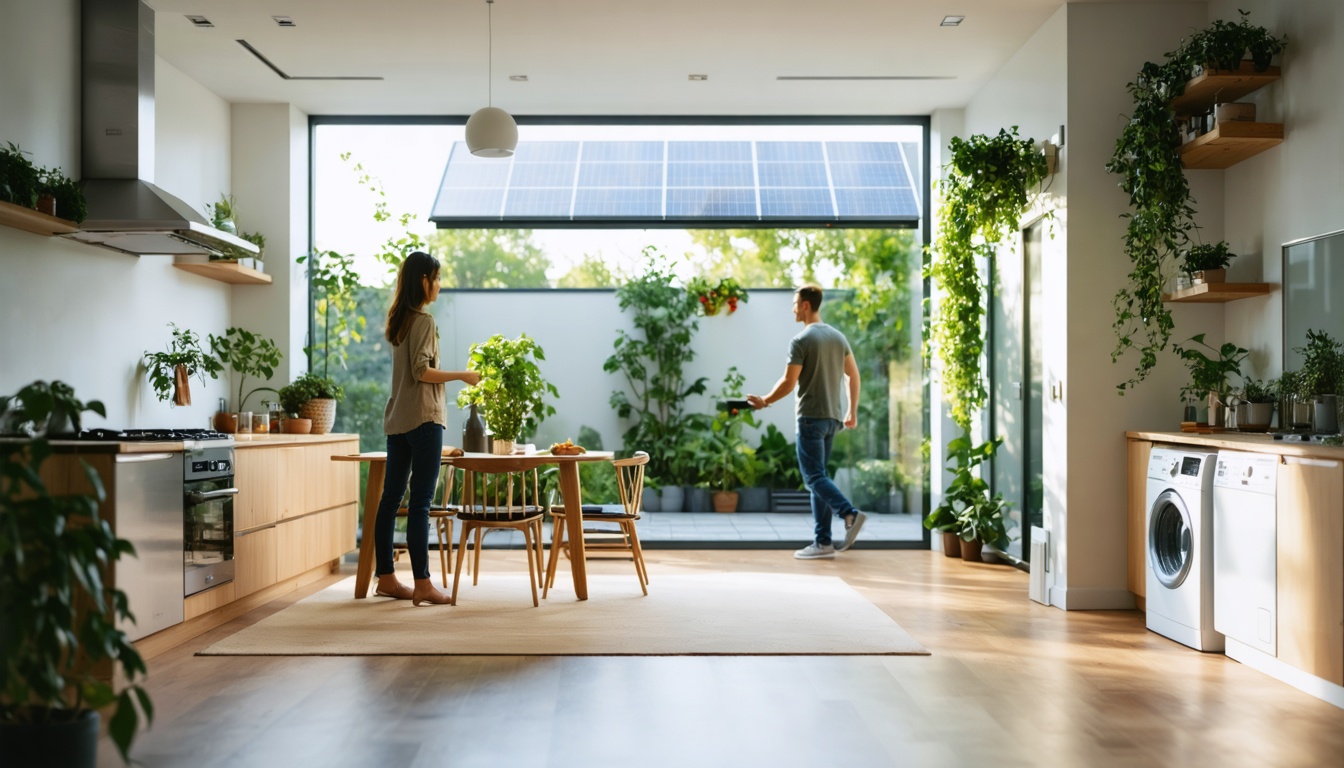
How Smart Energy Habits Can Reduce Household Electricity Waste
Implementing small changes in daily routines can lead to a noticeable reduction in household electricity consumption and subsequently lower energy bills. Practices such as turning off lights when leaving a room, transitioning to LED bulbs, and utilizing smart meters to monitor energy usage are effective strategies. These modifications, while seemingly minor, can collectively result in significant energy savings.
For instance, LED bulbs consume up to 75% less energy than traditional incandescent bulbs and have a longer lifespan, which contributes to both cost savings and reduced environmental impact. Additionally, smart meters provide real-time feedback on energy usage, allowing homeowners to identify high-consumption periods and adjust their habits accordingly.
Adopting these energy-saving practices not only enhances financial efficiency but also contributes to reducing the overall carbon footprint of households. By understanding and implementing effective energy management strategies, homeowners can create a more sustainable living environment while also achieving cost savings.
Turning Off Lights and Appliances When Not in Use
Turning off lights and unplugging appliances when they are not in use can significantly affect a household's energy consumption. This practice serves as an effective strategy to reduce energy usage and subsequently decrease utility bills. Specifically, lights in unoccupied rooms should be turned off, and electronic devices that consume standby power—commonly referred to as "vampire devices"—should be disconnected when they are not actively engaged.
Employing smart power strips can facilitate this process, as these devices are engineered to automatically power down machines that are not in use, thereby improving overall energy efficiency.
Additionally, the use of a smart meter can offer insights into energy consumption patterns, enabling homeowners to recognize and alter behaviors that lead to increased energy use. Other practical measures include minimizing the unnecessary operation of appliances, such as avoiding the use of a clothes dryer when it is not essential, and opting for fans over air conditioning for cooling when feasible.
These adjustments not only contribute to lower utility expenses but also promote energy conservation practices at a broader level. By maintaining an understanding of energy usage, households can support sustainable actions while realizing financial savings.
Upgrading to LED Lighting
Upgrading to LED lighting is a rational choice that can result in notable energy savings alongside other long-term benefits. LED bulbs are engineered to consume significantly less power than traditional incandescent bulbs, which leads to decreased energy consumption. Consequently, transitioning to LED lighting is among the more feasible upgrades that households can undertake.
LED lights are evaluated against established industry standards, and they consistently exhibit higher efficiency in energy usage and longevity. This improved efficiency translates to reduced utility bills, allowing households to manage their expenses more effectively over time.
Compared to incandescent bulbs, which generally require more electricity, LED bulbs are a more sustainable option. Although the upfront cost for LED lighting may be greater than that of traditional bulbs, the prolonged savings on energy expenses and their longer operational life often render them a financially sound decision.
In summary, upgrading to LED lighting marks a significant move toward the adoption of more efficient energy solutions, facilitating cost savings while supporting broader environmental sustainability initiatives.
Managing Home Temperature with Doors, Curtains, and Insulation
Effective management of indoor temperature is important for energy efficiency and cost reduction in homes. Practices such as closing doors and drawing curtains can help reduce the reliance on heating and cooling systems.
Ensuring that windows and doors are properly sealed, along with having adequate insulation, is critical to lowering energy consumption and enhancing efficiency.
For effective temperature control, it is recommended to set thermostats within the range of 18-20°C during winter months and above 26°C in summer. This approach can contribute to comfort while potentially lowering energy bills.
Furthermore, implementing minor modifications, such as upgrading insulation or using ceiling fans for better air circulation, can further reduce electricity and gas expenses.
These strategies align with industry standards focused on promoting energy efficiency. By implementing these measures, households can decrease power consumption, which can lead to reduced utility bills while maintaining the functionality of electronic devices.
Improving Laundry and Drying Practices
Adjusting your laundry routine can effectively reduce electricity consumption in your home. Using cold water for washing full loads is an efficient strategy, as it decreases reliance on hot water, which lowers the energy required by water heaters.
Furthermore, selecting shorter wash cycles can enhance washing efficiency and contribute to overall energy savings.
Clothes dryers are significant consumers of electricity or gas, which highlights the potential benefits of exploring alternative drying methods. Air drying clothes outdoors or using fans for indoor drying can substantially lower energy consumption compared to conventional drying processes.
Adopting these practices, alongside investing in appliances that comply with high-efficiency standards, can collectively lead to significant improvements in household energy consumption.
These adjustments are practical and supported by data on energy usage, offering a sustainable approach to laundry and drying practices.
Monitoring Consumption with Smart Meter Technology
Smart meter technology offers a systematic approach for households to monitor and manage their electricity consumption. It provides real-time data regarding energy usage, enabling residents to pinpoint the specific devices—such as electronics, water heaters, and clothes dryers—that have the most significant impact on their energy bills. This information is useful for making informed decisions on potential areas for reducing costs.
Implementing modest measures, such as switching to LED bulbs or utilizing smart power strips, can lead to notable reductions in energy expenses. Additionally, smart meters support the integration of renewable energy sources, including solar and wind power, thereby enhancing the effectiveness of an energy management system.
These devices also optimize operational efficiency by allowing users to automate their heating and cooling systems, manage lighting remotely, and improve both gas and electric consumption. Consequently, the use of smart meters can lead to a decrease in overall utility costs.
Enhancing Kitchen Efficiency
Optimizing kitchen practices can effectively reduce household electricity consumption. It is recommended to maintain your refrigerator at a temperature of 4-5°C and your freezer between -15 and -18°C. These settings are not only conducive to food preservation but are also designed to enhance energy efficiency, which can lead to lower utility costs.
Using the dishwasher exclusively when it is fully loaded and selecting economy cycles can further diminish energy usage. This practice, aligned with efficient loading, ensures that the appliance operates at optimal capacity, which is key to minimizing resource expenditure.
Moreover, turning off lights when they are not needed is a straightforward method to help manage electricity consumption.
Adopting minor upgrades, such as switching to LED lighting, significantly reduces energy demand in comparison to traditional incandescent bulbs. LED lights are known for their longevity and lower energy consumption, providing a cost-effective lighting solution.
It is also critical to ensure that refrigerator seals are intact. Proper seals prevent the escape of cold air, thus enhancing the efficiency of the appliance and reducing unnecessary energy loss.
Additional practical measures, such as thawing food in the refrigerator rather than at room temperature and covering pots while cooking, also contribute to decreased utility expenses.
These practices, while appearing minor, collectively have the potential to create a significant impact on energy consumption in the kitchen.
Optimizing Heating and Cooling Systems
Efficient management of heating and cooling systems in residential settings requires attention to several key factors that can impact energy consumption and utility costs. Setting thermostats to recommended temperatures—approximately 20°C in winter and above 26°C in summer—can contribute to energy savings by minimizing unnecessary energy usage.
Sealing gaps around windows is a practical measure for improving insulation. This can reduce the workload on heating and cooling systems, leading to cost savings.
Additionally, utilizing smart power strips and programmable thermostats can optimize energy use by ensuring systems are powered down when not in active use.
Regular maintenance, such as the replacement of filters, is important for maintaining the efficiency of electric, gas, and water heaters. These routine actions can help ensure that systems operate effectively.
Moreover, implementing passive cooling strategies, such as closing blinds during peak sunlight hours, can lessen the reliance on electronic cooling devices and provide further savings in household energy costs.
In summary, a combination of management practices can lead to improved efficiency in home heating and cooling systems, resulting in benefits for both energy consumption and household budgets.
Comparing Energy Providers for Cost Savings
Households may find it advantageous to assess alternatives to their existing energy providers. Regularly comparing energy plans can result in cost reductions, with potential decreases in electricity bills reaching about 25%. One effective method for identifying possible savings is the use of tools like the Victorian Energy Compare.
In addition to exploring different energy providers, it is advisable to analyze utility bills to understand consumption patterns and evaluate the energy efficiency of household appliances.
Appliances with lower star ratings, such as older gas water heaters and clothes dryers, typically consume more energy. Upgrading to more efficient appliances, transitioning to LED lighting, and employing smart power strip programs can significantly reduce overall energy consumption.
It is important to note that even small changes in energy usage and provider selection can lead to substantial cost savings over time. Thus, conducting a thorough review of energy options and consumption practices may enhance household financial management.
Incorporating Solar Energy and Accessing Rebates
The integration of solar energy into residential systems can serve as an effective strategy for reducing electricity consumption and managing utility expenses. By adopting solar technology, households can lessen their dependence on traditional electricity providers, which may lead to more advantageous pricing options.
Additionally, various federal and state initiatives, including services like New Hampshire Renewable Energy Services, are available that offer rebates for solar installations, which can help offset the initial investment costs associated with these enhancements.
In conjunction with solar energy, transitioning to other renewable resources, such as wind and offshore energy, can further improve energy efficiency. Upgrading to high-efficiency appliances, including ENERGY STAR-rated water heaters and LED lighting, may contribute to additional energy savings.
Implementing small yet impactful measures, such as using smart power strips and smart meters, can also assist in reducing overall energy consumption.
In summary, these strategies may result in lower energy bills and potential long-term financial benefits, making them practical considerations for households looking to improve energy efficiency.
Sharing factual insights about these options through social media platforms can help promote awareness of sustainable energy practices.
Conclusion
Implementing certain energy-saving strategies can help reduce household electricity consumption and lower utility bills over time. One key practice is to turn off lights and unplug appliances when they are not in use, which can prevent unnecessary energy expenditure. Upgrading to energy-efficient LED light bulbs is another effective measure, as they consume significantly less electricity compared to traditional incandescent bulbs.
Additionally, optimizing heating and cooling systems is crucial for energy efficiency. This may involve regular maintenance of HVAC systems, using programmable thermostats, or appropriately insulating one’s home to reduce reliance on heating and cooling.
Moreover, the integration of smart technology can further enhance energy management. Smart home devices can monitor and adjust energy usage based on real-time data, allowing homeowners to optimize consumption. It is also beneficial to explore available rebates and incentives for energy-efficient upgrades, as many programs aim to promote renewable energy sources and energy-efficient appliances.
By consistently adopting these practices, households can achieve a reduction in energy waste, contributing to both financial savings and environmental sustainability. |


